Archives

Suburbicon (Original Motion Picture Soundtrack)

Twenty-two of the tracks on Suburbicon (Original Motion Picture Soundtrack) are Alexandre Desplat originals, the lone exception being “When I Fall In Love,” a standard that was written by Victor Young and Edward Heyman for the 1952 film One Minute to Zero. The jazzy instrumental rendition heard on the Suburbicon soundtrack features Allen Hoist’s lead sax.

Suburbicon: Original Motion Picture Soundtrack was recorded by Peter Cobbin at the world famous Abbey Road Studios and British Grove Studios in London. It was mixed by Peter Cobbin and Kirsty Whalley at Henry Licht in Islington.

All tracks composed by Alexandre Desplat except *composed by Victor Young and Edward Heyman.

Their Satanic Majesties Request – 50th Anniversary Special Edition

The 50th anniversary of The Rolling Stones album Their Satanic Majesties Request, limited edition deluxe double vinyl/double hybrid Super Audio CD (compatible with all CD players). The set contains both the stereo and mono versions of every song, all newly remastered by Bob Ludwig, and  Michael Cooper’s original 3-D lenticular cover photograph, featuring the band in peak psychedelic regalia.

Originally released in December of 1967, Their Satanic Majesties Request is the first self-produced album in the Stones’ vast catalog. Experimental in nature, it was such a departure from the band’s rhythm & blues roots that it threw critics for a loop. Initially derided by Rolling Stone Magazine for being “too infused with the pretentions of their musical inferiors” (namely the Beatles), the record was simultaneously lauded by DownBeat with a five-star review declaring the album “a revolutionary event in modern pop music.”* Over the ensuing decades, it has proven to be a highly influential body of work; generations of bands have covered Satanic songs, from punk legends The Damned, Bad Brains, and Redd Kross, to hard rockers KISS and Monster Magnet, as well as indie tastemakers Cibo Matto and Arcade Fire. Music from the album can be heard in Wes Anderson’s directorial debut Bottle Rocket.

The title was derived from a pun based on the inside of British passports at the time which read, “Her Britannic Majesties Principal Secretary of State for Foreign Affairs Requests and Requires . . .” Their Satanic Majesties Request was recorded in pieces between February and October of 1967. It was a tumultuous period for the Rolling Stones – Mick Jagger, Keith Richards and Brian Jones were arrested for drug possession, with Jones spending three weeks in a nursing home. The Stones’ original manager/producer Andrew Loog Oldham quit halfway through recording sessions, leaving the band to finish the album on their own. A chaotic spring European tour that involved a riot in Poland also interrupted workflow. Very rarely were all five members in the studio at the same time but despite these impediments, Charlie Watts recalled, “The sessions were a lot of fun because you could do anything. It was so druggy—acid and all that.”

Grammy award-winning music historian Rob Bowman writes in the liner notes for the new set, “Their Satanic Majesties Request should be recognized as an important stepping stone in The Rolling Stones’ development from an r&b-inspired band to the inventors of modern rock for the 1970s.” Falling between Between the Buttons and Beggars Banquet, it was the first of their albums to have identical tracklists in the U.S. and UK. Satanic Majesties’ ten tunes are saturated with studio effects, non-traditional instruments such as mellotron and theremin, ambient sounds created using oscillators, string arrangements by John Paul Jones (who went on to help establish Led Zeppelin the following year) and more percussive devices than can be named. “Citadel” foreshadowed the direction towards straight-forward rock the Stones would take, while “2000 Light Years From Home” and “She’s a Rainbow” (a minor hit in the U.S.) capture the band in all its psychedelic glory at that moment in time. They remain the only two songs from the album the band has ever played live. “Sing This All Together,” its looser reprise “Sing This All Together (See What Happens),” “Gomper” and “On With the Show” transition from traditional song structure to free-form freakout – a trademark of that era, also heard on records by the Mothers of Invention and Pink Floyd.

Big Little Lies: Music From The HBO Limited Series

Based on New York Times number-one bestseller of the same name by Liane Moriarty Big Little Lies, the seven-episode HBO drama series starring Reese Witherspoon, Nicole Kidman, Shailene Woodley and Alexander Skarsgård follows three mothers in the tranquil seaside town of Monterey, California whose seemingly perfect lives unravel to the point of murder. Written for television and created by David E. Kelley (Picket Fences, LA Law, The Practice, Ally McBeal), the series was directed entirely by Jean-Marc Vallée (Dallas Buyers Club, Wild, Demolition), and premiered last month.

 “Jean-Marc uses music like Jackson Pollock used paint,” comments Big Little Lies music supervisor Susan Jacobs, who also worked with Vallée on his previous two films. “There is a lot of truth in the music of Big Little Lies.”

Songs Of Faith

In the early 1960’s, before the advent of the Beatles and the “British Invasion” that ensued in their wake, the US pop charts were dominated by Philadelphia’s Cameo/Parkway label. The independent company scored hit after hit with releases by Chubby Checker, Bobby Rydell, The Orlons, The Dovells and others. In early 1962, Chubby Checker recorded “Slow Twistin’” and was paired with Dee Dee Sharp, an up and coming 17 year old female vocalist who had attended Overbrook High School with members of the Orlons and Dovells.

Producers Kal Mann and Dave Appell sensed a special talent in the young woman and invited her to come back to the studio to record on her own. Very shortly, thereafter, — a matter of mere hours – she returned to record “Mashed Potato Time,” the song would go as far as #2 on the pop chart and all the way to #1 on the R&B chart. Dee Dee Sharp was off and running and followed up that initial hit with a string of dance-themed releases including “Gravy (For My Mashed Potatoes),” “Ride!” and “Do The Bird.” While Dee Dee had a constant presence on the pop and R&B charts back then, her true talent transcended the dance/novelty material with which she had so much success.

Like so many young black artists, she had grounding in gospel music having sung in her grandfather’s church and with Philadelphia’s All-City Choir. Early in life, she was mentored by Willa Ward, sister of gospel great Clara Ward. Mann and Appell were well aware of the breadth of her talent in this regard and arranged for her to record an entire album of inspirational not, strictly speaking, gospel music, backed most lushly, by a full studio orchestra of more than 20 pieces. The team travelled from Philadelphia to New York’s Capitol Studios where, over the course of just two days in August 1962, Songs of Faith was recorded at that state of the art facility, completely live with no overdubbing. Backing vocals were provided by “The Cameos,” including the aforementioned Willa Ward, who had, most famously backed up Bobby Rydell on “Swingin’ School” (“Oh, Bobby, oh..”) and numerous other recording for the label. The album had been out of print and will now be available once again as ABKCO Records has set October 21 as the date for the album’s reissue both on CD and in digital formats.

Dee Dee Sharp still attends Philadelphia’s Third Eternal Baptist Church where Eubie Gilbert, her grandfather, served as pastor when she was a child and vividly recollects the Songs of Faith sessions. “Most of these were done in one or just a few takes. I love singing with live orchestras and I’d been singing most of these songs for my whole life so it was easy.” She continued, “Singing gospel has always been my heart’s desire and while this album isn’t ‘gut gospel,’ I love these songs. I sang ‘Climb Every Mountain’ at my Junior High School graduation from Thomas Fitzsimons Junior High and my grandfather was there. I remember him in the audience just beaming.’

The album’s twelve selections ran the gamut from early gospel hymns (Thomas A. Dorsey’s “Peace In The Valley”) and spirituals (“He Got The Whole World In His Hand) to country-pop (“Vaya Con Dios) to Broadway-sourced material (“Climb Every Mountain” is from The Sound of Music). The new edition includes insightful liner notes by Gayle Wald, Professor of English and American Studies at George Washington University and author of Shout, Sister, Shout!: The Untold Story of Rock–and-Roll Trailblazer Sister Rosetta Tharpe.

Though not a commercial success when first released, this long lost musical treasure trove from Dee Dee Sharp stands the test of time. She is more than delighted it is again available. She confides, “Truthfully, I have longed for this album to come out again, it’s been something of a secret desire of mine. It’s a blessing. This is the kind of music I feel the happiest doing.”

THE ROLLING STONES monobox-cover

The Rolling Stones in Mono (Vinyl Box Set)

15 CDs, 150+ TRACKS, INCLUDING A 48-PAGE BOOK WITH RARE PHOTOS AND ESSAY.

The Rolling Stones in Mono covers the formative years of “The Greatest Rock & Roll Band in the World.” During this era, most rock and pop recordings were originally recorded in mono, with stereo often an afterthought, dealt with only following the completion of the original (mono) version of a given track. In short, mono reigned and this was, indeed, the case for the Rolling Stones during the period. While typical playback systems of the time were less than sophisticated, the original mono recordings, especially as heard through quality components, were of the highest audio quality and had a powerful and very direct impact. “You felt you were in the room . . . listening to exactly what went down in the studio, no frills, no nothing,” Keith Richards wrote in his autobiography, Life. “Rock was a completely new musical form,” Mick Jagger explained in a 1995 Rolling Stone interview. “It hadn’t been around for ten years when we started doing it . . . You felt like one of the chosen few, one of the only ones in the world who would get to play with this new toy. We had evangelical fervor.” Late recording engineer Dave Hassinger explained how he mixed his ’64-’66 work for the Stones in mono, “They always played together at the same time,” Hassinger said. “They would run the parts down, work out the changes here and there, nail it down, then start recording.”

Rolling Stone senior editor David Fricke, in his 5,000-word essay that accompanies the set, writes, “The Rolling Stones in Mono is the full studio account of that first decade of history and mayhem, newly remastered with unprecedented fidelity and revelatory detail.” His commentaries are included with the vinyl and CD box sets as part of a 4-color deluxe 48 page lie flat book that features numerous rare photos by renowned photographer Terry O’Neill. The 16 LPs or 15 CDs are housed in the original full-color album jackets that fit along with the book into a one-piece specially crafted box.

The Rolling Stones in Mono was mastered by acclaimed GRAMMY® award winning engineer Bob Ludwig at Gateway Mastering. For the project he utilized Direct Stream Digital (DSD) transfers from the original master recordings, with a sampling rate of 2,822,400. Lacquer cutting for vinyl was performed at Abbey Road Studios by Alex Wharton and Sean Magee. All vinyl box sets will be numbered and pressed on 180-gram vinyl. The Rolling Stones in Mono project has been overseen by Teri Landi, ABKCO’s Grammy award winning Chief Audio Engineer.

The Rolling Stones In Mono 16 LP vinyl box set; 15 CD box set (Also available digitally)
1) The Rolling Stones (UK, 1964)
2) 12 X 5 (1964)
3) The Rolling Stones No. 2 (UK, 1965)
4) The Rolling Stones Now! (1965)
5) Out of Our Heads (US, 1965)
6) Out of Our Heads (UK, 1965)
7) December’s Children (And Everybody’s) (1965)
8) Aftermath (UK, 1966)
9) Aftermath (US, 1966)
10) Between the Buttons (UK, 1967)
11) Flowers (1967)
12) Their Satanic Majesties Request (1967)
13) Beggar’s Banquet (1968)
14) Let it Bleed (1969)
15) Stray Cats (a new collection of single A & B sides plus E.P. tracks)

THE ROLLING STONES monobox-cover

The Rolling Stones in Mono (CD Box Set)

15 CDs, 150+ TRACKS, INCLUDING A 48-PAGE BOOK WITH RARE PHOTOS AND ESSAY.

The Rolling Stones in Mono covers the formative years of “The Greatest Rock & Roll Band in the World.” During this era, most rock and pop recordings were originally recorded in mono, with stereo often an afterthought, dealt with only following the completion of the original (mono) version of a given track. In short, mono reigned and this was, indeed, the case for the Rolling Stones during the period. While typical playback systems of the time were less than sophisticated, the original mono recordings, especially as heard through quality components, were of the highest audio quality and had a powerful and very direct impact. “You felt you were in the room . . . listening to exactly what went down in the studio, no frills, no nothing,” Keith Richards wrote in his autobiography, Life. “Rock was a completely new musical form,” Mick Jagger explained in a 1995 Rolling Stone interview. “It hadn’t been around for ten years when we started doing it . . . You felt like one of the chosen few, one of the only ones in the world who would get to play with this new toy. We had evangelical fervor.” Late recording engineer Dave Hassinger explained how he mixed his ’64-’66 work for the Stones in mono, “They always played together at the same time,” Hassinger said. “They would run the parts down, work out the changes here and there, nail it down, then start recording.”

Rolling Stone senior editor David Fricke, in his 5,000-word essay that accompanies the set, writes, “The Rolling Stones in Mono is the full studio account of that first decade of history and mayhem, newly remastered with unprecedented fidelity and revelatory detail.” His commentaries are included with the vinyl and CD box sets as part of a 4-color deluxe 48 page lie flat book that features numerous rare photos by renowned photographer Terry O’Neill. The 16 LPs or 15 CDs are housed in the original full color album jackets that fit along with the book into a one piece specially crafted box.

The Rolling Stones in Mono was mastered by acclaimed GRAMMY® award winning engineer Bob Ludwig at Gateway Mastering. For the project he utilized Direct Stream Digital (DSD) transfers from the original master recordings, with a sampling rate of 2,822,400. Lacquer cutting for vinyl was performed at Abbey Road Studios by Alex Wharton and Sean Magee. All vinyl box sets will be numbered and pressed on 180-gram vinyl. The Rolling Stones in Mono project has been overseen by Teri Landi, ABKCO’s Grammy award winning Chief Audio Engineer.


Demolition (Music From The Motion Picture)

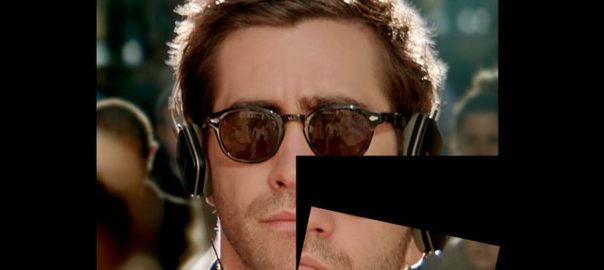
The music used in Demolition ranges from the familiar to the eclectic. Heart’s 1976 debut U.S. single “Crazy on You,” notable for its unusual combination of acoustic and electric guitar parts, was also the Seattle rock band’s breakthrough hit. Paul Rodgers-fronted English band Free is most known for the massive 1970 rocker “All Right Now” from their Fire and Water album. Skirting the obvious, however, Demolition instead utilizes “Mr. Big,” a live version (Sunderland, 1970) of a deep album cut from the aforementioned album. Further avoiding a track selection that is too “on the nose” is the inclusion of “It’s All Over Now, Baby Blue,” a Bob Dylan original that proved massive upon its 1965 release. The ballad spawned popular cover versions by the Byrds and Them, but it’s San Jose garage outfit Chocolate Watchband’s intense rendition that features prominently in Demolition. “When I Was Young,” a 1967 intercontinental hit for Eric Burdon & The Animals, fits the film’s themes of disillusionment with the present, and longing for the re-connection with youth.

Balancing out these tracks on Demolition: Music From The Motion Picture is a slew of songs by heavy hitters in the current indie world. “Touch Me I’m Going To Scream (Pt. 2),” a 2008 single by Louisville, KY group My Morning Jacket, singer-songwriter Sufjan Steven’s “To Be Alone With You,” from his 2004 album Seven Swans, and critically acclaimed songwriter M. Ward’s “Watch The Show” from A Wasteland Companion (2008) represent the more established contingent. Lesser known, but equally integral to Demolition are “Bruises” by Canadian indie band Dusted, Chicago-based psychedelic drone quartet Cave’s “Sweaty Fingers,” and French model/actress/singer Lou Doillon’s “Where To Start,” a single released last year. Closing out the package is Half Moon Run, a newer band from Vallée’s native Montreal, with an extended version of “Warmest Regards,” which appeared in a more abridged form on their new album Sun Leads Me On.

Music From The Motion Picture JOY

Five-time Oscar nominee David O. Russell commented, “There are songs here I have been waiting almost 40 years to use in a movie, from ‘Aguas de Marzo’, Ella Fitzgerald’s ‘I Want to Be Happy’, Bee Gees ‘To Love Somebody’, to the rare Nat King Cole ‘A House With Love In It,’ with his singular spoken radio introduction to the song. Cream’s ‘I Feel Free,’ with the acapella harmonizing of Jack Bruce and Eric Clapton which at the film’s end, becomes the new recording made for the film by Brittney Howard of The Alabama Shakes, amazingly overdubbed with her incomparable voice. The privilege of making a simple quiet piano version of Springsteen’s soulful melody ‘Racing In the Street’, and the singing of collaborators Jennifer and Edgar, these are what make a movie magical to me, and why I love going to the movies and listening to their soundtracks. Our score by West, David, and Blake is at the heart of the picture, together with the choirs.”

In addition to an original score provided by West Dylan Thordson and David Campbell, with additional music by Blake Mills, Music From the Motion Picture JOY contains a swath of timeless songs, ranging stylistically from Latin jazz to hard bop to rock and roll. The collection is bookended by two versions of “I Feel Free” – the original, which was an early hit for power trio (Eric Clapton, Jack Bruce, Ginger Baker) Cream, and a brand new rendition performed by Alabama Shakes vocalist Brittany Howard.

Other significant tracks include “Stray Cat Blues,” from The Rolling Stones’ acclaimed 1968 album Beggars Banquet, and “Sleigh Ride” by the Ronettes, which originally appeared on Phil Spector’s A Christmas Gift for You, considered by many to be the quintessential Christmas album. The title track from Lee Morgan’s landmark 1964 album The Sidewinder is another JOY standout.

As is often the case with David O. Russell films, the track selection for JOY leans towards the less obvious. “To Love Somebody” is an early Bee Gees single that was only a minor hit in the U.S. and UK in 1967. “I Want to Be Happy,” an original composition for the 1925 musical No, No, Nanette, is performed by a the pre-superstar Ella Fitzgerald, when she was still with Chick Webb and his Orchestra. “A House With Love In It” is performed by Nat King Cole from his groundbreaking 1956-57 NBC television program The Nat King Cole Show. This rare version has not been generally available in the U.S.

Music From the Motion Picture JOY contains three musical performances by cast members that are featured in the film itself. Edgar Ramirez sings the Randy Newman-penned “Mama Told Me Not To Come,” most well known as a 1970 hit for Three Dog Night. He is backed by Latin jazz mainstays Ray de la Paz and The Pedrito Martinez Group. Ramirez, as the character Tony Miranne, also sings Antonio Carlos Jobim’s “Aguas De Marzo,” while his duet with Jennifer Lawrence underscores their characters’ relationship. The two actors sing “Something Stupid,” a duet that was a massive number one hit for Frank and daughter Nancy Sinatra in 1967.

Story and song are intertwined throughout JOY, and having all of the crucial tracks featured in the film represented in one package is an uncommon gift. Music supervisor Susan Jacobs, who also worked with Mr. David O. Russell on American Hustle and Silver Linings Playbook, meticulously chose a collection of songs used to carry forth the themes that serve as threads throughout the film.

Digital release date: December 18
Physical release date: January 8

People Places Things

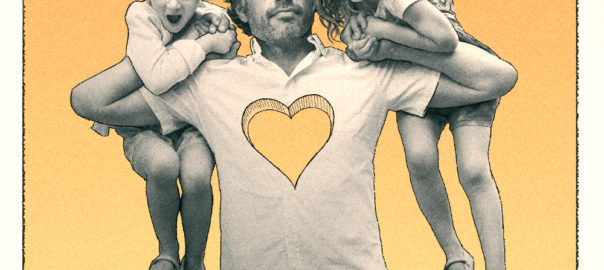
ABKCO Records will release the official soundtrack to Jim Strouse’s heartfelt comedy, People, Places and Things on August 14, concurrent with The Film Arcade’s release of the film in theaters, On Demand and iTunes. The film premiered at The Sundance Film Festival this year and stars Jemaine Clement as a single father navigating parenting and relationships in New York City. Writer director Jim Strouse made his directorial debut on the John Cusack- film Grace Is Gone, which won the Audience Award at 2007 Sundance. People, Places and Things features an original score by composer/multi-instrumentalist, Mark Orton.

“James’ main directive for the film’s music was that it represent the full range of both the characters and the narrative, and while the film is a comedy, there is real melancholy as well. The music also had to follow the inner life of the main character, Will (Jemaine Clement). He plays the part of a graphic novelist and is working on his drawings throughout the film. These moments are without dialogue and so allowed me a certain freedom musically – and the drawings themselves provided inspiration for my music too,” explains Orton of his inspiration for the musical landscape of the film.

Mark Orton is active as an award winning film composer. A recipient of a Sundance composer fellowship, he was nominated Best New Composer by The International Film Music Critics Association. He has written scores for, or contributed music to films including The Good Girl, Buck and Alexander Payne’s Academy Award nominated Nebraska. When not composing for films, Orton records with the San Francisco-based composer collective Tin Hat Trio and has worked as an arranger and producer for such artists as Tom Waits, Madeline Peyroux, and Willie Nelson.

The official soundtrack for People, Places and Things features 23 original tracks and will be distributed globally.